
How to Grow Salad Greens All Fall & Skip the Grocery Store
If you’re hoping to grow salad greens this fall, you’re in the right place. I eat salads almost every day, and it’s my goal to never have to buy salad greens at the grocery store again. Growing your own salad greens isn’t just possible in the cooler months, it can actually be easier than spring gardening. But it does take a little bit of planning, especially to make the most of fall’s unique growing conditions.
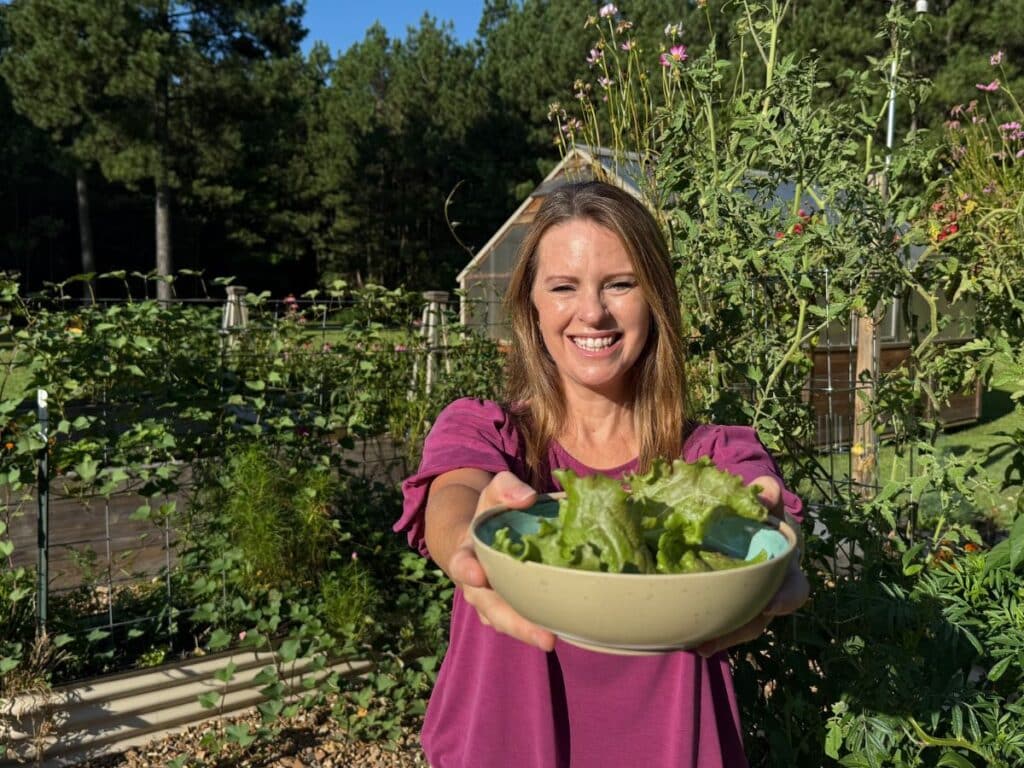
Whether you’re just getting started with fall gardening or you’ve done it before and want to have more success, this post shares what’s worked for me when it comes to growing salad greens all season long.
Prefer to watch instead of read? You can watch the video that inspired this post on YouTube here:
Table of Contents
- Why Fall Is the Best Time to Grow Salad Greens
- Step 1: Deciding What To Plant
- The Best Salad Greens to Plant in Fall
- Step 2: Choosing How To Plant
- How to Start Seeds in Hot Weather
- Step 3: Write Your Planting Dates on a Calendar
- Timing Your Planting for Fall Success
- How to Overwinter Salad Greens
- How Much to Plant for Fall Salads
- Final Thoughts
Why Fall Is the Best Time to Grow Salad Greens
If you’ve only ever planted salad greens in the spring, you’re in for a treat. Fall offers the perfect growing conditions: cooler temperatures, fewer pests, and more consistent moisture. Most salad greens like arugula, lettuce, spinach, mustard, and mesclun thrive in the cool weather.
Plus, if you grow salad greens in the fall, you’ll often enjoy better texture, fewer problems with bolting, and longer harvest windows than in spring. Fall-grown greens are sweeter and crisper thanks to the cooler air.
Step 1: Deciding What To Plant
The Best Salad Greens to Plant in Fall
The first step is to decide what to plant. When it comes to selecting the best salad greens to plant in the fall, make sure you take in account what you actually love to eat. I like to grow salad greens that give me lots of variety—different flavors, textures, and colors. Here’s a look at what I plant and why:
- Lettuce: I love a mix of crisp and tender varieties. For the late summer planting, I go with heat-tolerant types like Hampton Easy Leaf, Cherokee, and Muir. As the season cools, I switch to cold-tolerant ones like Tango and Winter Density.
- Spinach: Fall spinach needs to be cold-hardy. I choose varieties like Beaujolais that handle chilly temps well and can overwinter.
- Arugula & Mustard Greens: These are fast-growing and less picky about soil temps. I direct sow them every couple of weeks.
- Mesclun Mixes & Brassica Greens: These offer a good mix of baby kale, mizuna, pak choi, and other cool-season favorites. They’re perfect for direct sowing.
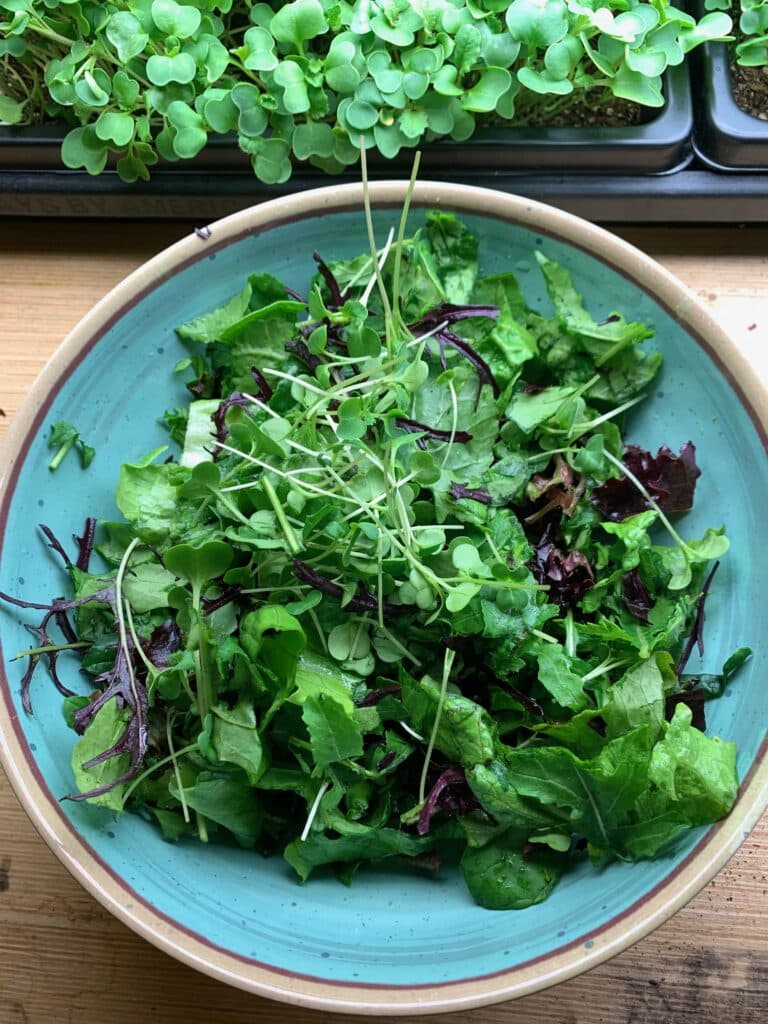
If you want to grow salad greens all season, aim for variety not just in plant types but in temperature tolerance. This staggered planting keeps your harvests going well into winter.
Step 2: Choosing How To Plant
How to Start Seeds in Hot Weather
The second step is choosing how to plant your seeds. One of the trickiest parts of fall gardening is getting seeds to germinate in hot soil. Lettuce and spinach, in particular, don’t like to sprout when the soil is too warm.
Here’s what works for me:
- Start Lettuce Indoors: I sow my lettuce seeds indoors under grow lights about a month before I want to plant outside. Once they’ve grown a few sets of true leaves, I harden them off and transplant them outside. I’ll even plant them in partial shade if it’s still hot. Once the soil temperature dips to around 80, lettuce seeds will germinate fine and you could switch to direct sowing them if desired.
- Spinach: I don’t transplant spinach in fall—it just hasn’t worked well for me. Instead, I direct sow it around mid-September when soil temps cool to about 75–80°F.
- Arugula, Mustard, and Brassicas: These germinate easily even in warm soil, so I sow them directly in the garden from late summer through fall.
If you want to grow salad greens successfully in the heat, indoor seed starting can make a huge difference—especially for lettuce.
Step 3: Write Your Planting Dates on a Calendar
Timing Your Planting for Fall Success
Our next step is to take the time to write your planting dates on a calendar. When you grow salad greens in the fall, timing is everything. The goal isn’t to beat the frost but to get your crops to a harvestable stage before your Persephone period begins. This is the time of year when daylight drops below 10 hours, and plant growth slows dramatically.
In central Arkansas (Zone 8a), that period begins around November 28. So I aim to get my final round of plantings done by early September. Here’s a rough schedule:
- Mid-July: Start first round of lettuce and brassicas indoors
- Early August: Start another round of lettuce
- Late August to Early September: Final rounds of direct sowing spinach and greens
If you’re not sure when your Persephone period starts, you can search online using your location. In most areas, the Persephone period—when day length drops below 10 hours—starts between early November and early December, depending on your latitude.
For example, in Zone 8a (Central Arkansas where I’m located), it begins around November 28. If you’re farther north, it can start as early as the first week of November. In warmer southern regions, you may not dip below 10 hours of daylight at all.
Once you know your timing, you can plan your seed starting and planting accordingly.
How to Overwinter Salad Greens
One of the best parts about fall gardening is that you can grow salad greens that last well into winter. Some will keep growing in mild climates. Others will pause and stay fresh for weeks—like they’re stored in nature’s refrigerator.
To protect your greens:
- Use floating row covers during cold snaps
- Grow in a greenhouse or cold frame if you have one
- Choose cold-hardy varieties that can withstand freezing temps
I’ve harvested Tango lettuce after snow and spinach after single-digit temperatures. You may not get fast growth, but what’s there will hold well and stay crisp.
How Much to Plant for Fall Salads
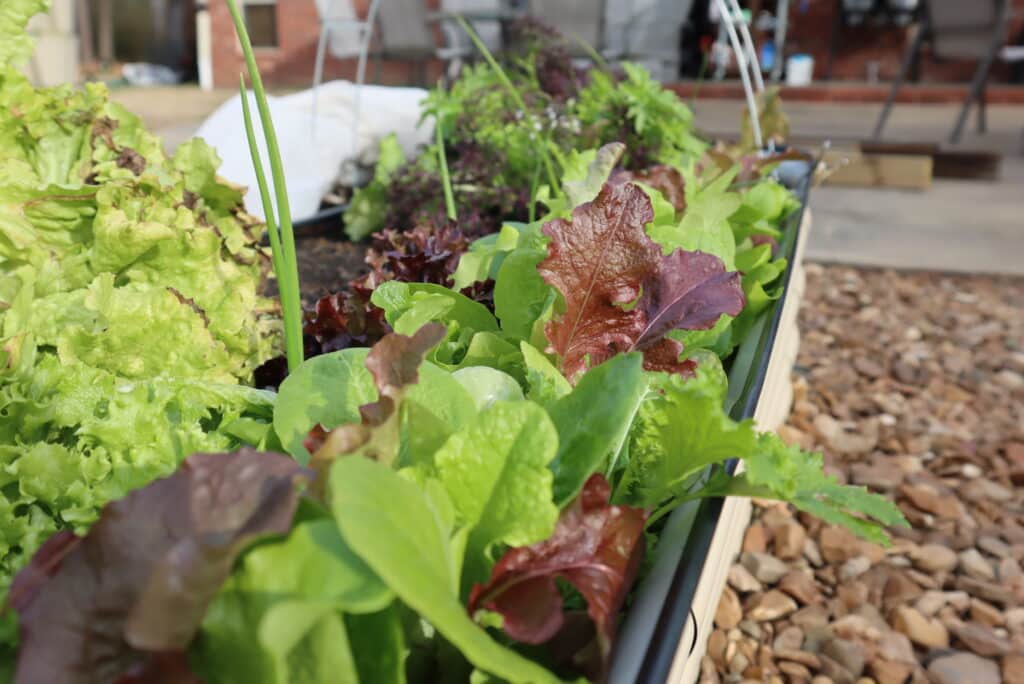
Here’s something I learned the hard way: you need to plant more in the fall than you do in the spring.
That’s because:
- Growth is slower as daylight fades
- You can’t rely on regrowth or cut-and-come-again harvests as easily
- You’ll want mature plants ready to harvest before winter sets in
I aim to plant twice as much in fall as I do in spring. This gives me enough to harvest regularly and still leave some in the garden to hold through the cold.
Final Thoughts
Once you grow salad greens in the fall, you’ll wonder why you didn’t start sooner. Not only are homegrown greens fresher, tastier, and more nutritious, but they’ll save you from those disappointing, soggy store-bought bags.
Want help getting started? Download my free Fall Salad Garden Planning Calendar. It tells you exactly when to plant and what to plant based on your zone. Whether you’re in Zone 6, 7, or 8, this guide takes the guesswork out of timing.
👉 Grab it now at https://journeywithjill.net/fallsaladgarden
Here’s to skipping the grocery store and growing your own salad greens—straight from your backyard!
Free Resources
Get Free Access to My Beginner’s Garden Resource Vault of 20+ Printable Gardening Guides
I’m living proof that a beginner can grow a rewarding garden. And I want to help you grow yours.

